
Regular cycling with rest periods maintains benefits while minimizing concerns about continuous use. Topical copper peptide products (serums, creams) deliver GHK-CU through the skin rather than injection. Understanding alternatives helps researchers choose appropriate compounds for their goals. GHK-CU is not the only option for researchers interested in tissue repair and anti-aging. This does not mean higher doses are beneficial, only that accidental overdose within reasonable ranges carries minimal acute risk.
Using Connectivity Map data from the Broad Institute, researchers found that GHK modulates 4,000+ genes. This information is for educational purposes only and does not constitute medical advice. A small subset of users report paradoxical skin effects, accelerated breakouts or surface aging when first starting copper peptide therapy.
For anti-aging goals, the GHK-Cu dosage that most researchers find effective falls in the 1–2 mg/day range for injectable subcutaneous use, or 2–4% concentration for topical application. Long-term, high-dose injectable use (above 5 mg/day) without cycling could theoretically contribute to copper accumulation and warrants periodic monitoring. The main consideration at higher combined doses is total copper intake — at standard doses (1–2 mg injectable + topical serum), copper loading remains minimal and clinically insignificant for most people. Use our peptide reconstitution calculator for precise calculations based on your vial size and target dose. When products simply say “copper peptide,” they almost always mean GHK-Cu.
Why injected GHK-Cu is a different risk conversation
Better value per milligram is provided by larger vials; however, they need proper storage and may lead to waste if unused within the 30-day stability period after reconstitution. By understanding the cost per dose MOTS-c peptide guide , you can effectively budget and make comparisons between different vial sizes. The main point is that measurable and documented enhancements occur with consistent use of GHK-CU at the right dosages. Research indicates that copper peptides are recognized for their extensive safe application in wound healing and skincare, displaying effectiveness even in very low concentrations.
Visible regrowth in thinning areas typically takes 3-6 months of consistent daily use. Look for 0.5-1% GHK-Cu or equivalent copper peptide complex. Leave-in treatments or serums should be applied daily to dry scalp, focusing on thinning areas. By weeks 8 to 12 wrinkle depth and firmness change visibly, and the biggest gains land around months 4 to 6 with continued use. GHK-Cu is generally non-irritating, but some people get mild redness when first starting.

In people, the trials we found mostly tested creams on ageing skin. Dosing and injection information reflects community-reported research protocols, not validated regimens. It is not a sign of spoilage; in fact, the absence of any blue can indicate a product lacks real copper peptide.
Is injectable GHK-Cu legal in 2026?
No single cycling protocol has proven superior. The cycling pattern prevents potential receptor desensitization and gives the body periodic breaks from exogenous copper peptide input. Injectable use is a separate, less-studied route, and copper peptides can irritate injection sites. Running these together during a loading phase (especially for joint, tendon, or connective tissue goals) is a well-established protocol.
Timeline for GHK-Cu: findings from research and user feedback over a period of 12 weeks
No — GHK-Cu is more often studied for the opposite, supporting hair follicle size and growth, and copper peptides appear in some hair tonics and post-transplant protocols. Some users add copper peptide to their hair routine and report thicker-looking hair or better scalp condition over several months, while others see little. The single most consistent positive report is improved skin texture — smoother, more even, more “bouncy” skin, and a subtle radiance people often call a glow.
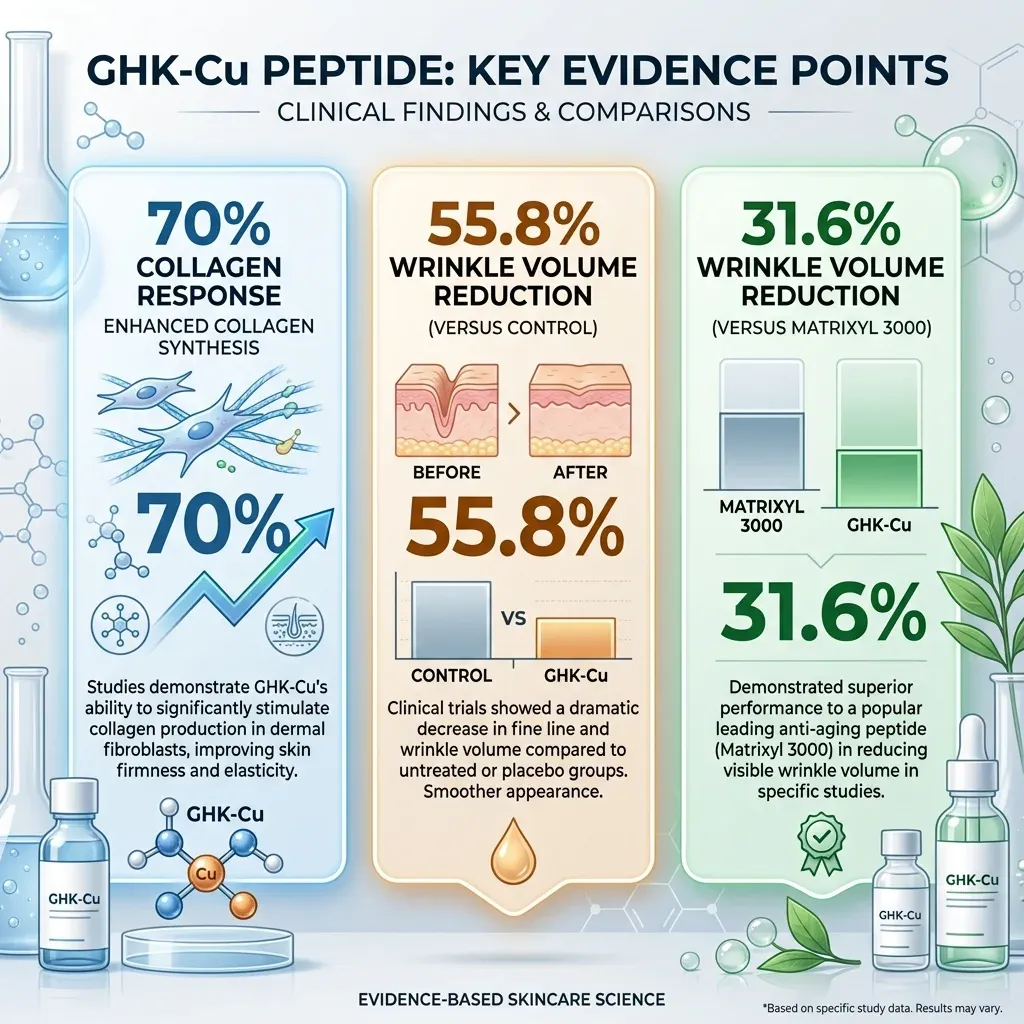
This is the use with the best research backing, and community reports tend to echo it — though people note it works far better on fresh healing than on old, set scars. Longer-term users commonly report softened fine lines and firmer-feeling skin over two to three months of consistent use, which lines up with the clinical timeline. Each works differently, and many people use them together rather than choosing one.
Simultaneous usage of both methods is common among many researchers — topical applications for localized cosmetic effects and injectables for broader systemic advantages. For researchers administering subcutaneous GHK-Cu injections, it is crucial to adhere to a consistent and sterile protocol for safety and optimal outcomes, as low to moderate skin barrier limits penetration to approximately 1-5% of the applied dosage. Utilize the peptide reconstitution calculator to achieve accurate calculations based on the size of your vial and desired dose. While there is no known risk of interaction between the two administration routes, it is advisable to keep track of total copper intake at higher combined dosages.
For specific skin tightening, the investigated method involves applying a topical GHK-Cu cream once or twice daily over a 12-week period, with trials indicating improvements in laxity, firmness, and skin density among 67-71 women. Although other copper peptides like AHK-Cu are available, GHK-Cu stands out as the most extensively researched with the strongest clinical evidence. No formal studies have assessed long-term daily usage beyond 12 weeks in humans, making it wise to incorporate cycling with breaks. In documented combinations, GHK-Cu is linked to collagen production and matrix remodeling, whereas BPC-157 is associated with angiogenesis and growth factor signaling. The protocols, dosages, and reactions mentioned below originate from both published research and community self-reports. The term “copper uglies” refers to a phase of temporary purging, breakout, or irritation that some individuals may encounter when starting to use copper peptides, particularly with topical products layered over potent actives.

Comentarios recientes